Public speaking and persuasive communication are not new practices. Some of the most important ideas behind influence have been studied for more than 2,000 years.
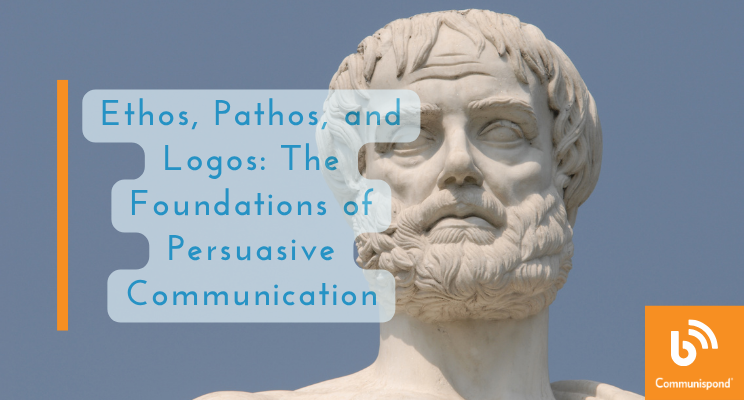
Aristotle, one of the foundational figures in rhetoric and public speaking, introduced the concepts of ethos, pathos, and logos in On Rhetoric to explain why persuasive messages work.
Although these terms come from ancient Greek, the ideas behind them are still highly relevant today. Whether you are giving a presentation, leading a meeting, influencing a decision, or communicating with clients, persuasive communication depends on credibility, emotional connection, and logical reasoning.
What Are Ethos, Pathos, and Logos?
Ethos, pathos, and logos are three essential elements of persuasion. Each one helps an audience decide whether to trust, care about, and accept your message.
- Ethos is credibility.
- Pathos is emotional connection.
- Logos is logic and reasoning.
Strong persuasive communication usually includes all three, but the balance depends on your audience, message, and situation.
Ethos: Build Credibility and Trust
Ethos refers to the credibility of the speaker.
People are more likely to believe a message when they trust the person delivering it. That trust may come from character, experience, authority, expertise, or shared values.
In business communication, ethos is especially important because audiences are constantly deciding whether a speaker is credible enough to follow, believe, or support.
Ethos is often shaped by:
- Trustworthiness
- Authority
- Expertise
- Similarity or relatability
- Consistency between words and actions
Before an audience accepts your recommendation, idea, or argument, they need to see you as a credible source.
This is one reason executive presence matters. The way professionals show up, communicate, and build trust directly affects how their message is received.
Pathos: Create Emotional Connection
Pathos refers to the emotional connection between the speaker and the audience.
People do not make decisions based on logic alone. Emotions such as trust, concern, hope, urgency, pride, frustration, and curiosity often shape how people respond to a message.
That does not mean persuasive communication should manipulate emotion. It means strong communicators understand what the audience cares about and connect the message to those concerns.
One of the most effective ways to create pathos is through story.
A relevant story can help an audience:
- See the meaning behind the message
- Relate to the situation
- Feel the importance of the issue
- Remember the point more clearly
- Connect emotionally before deciding logically
This is why business storytelling is such a powerful communication skill. Stories help transform information into meaning.
Logos: Support Your Message With Logic
Logos refers to logic, reasoning, and evidence.
Audiences want to understand whether your message makes sense. They look for facts, examples, data, structure, and reasoning that support your point of view.
Logos may include:
- Data
- Research
- Statistics
- Examples
- Cause-and-effect reasoning
- Clear structure
- Practical implications
In a business presentation, logos helps the audience understand the case you are making and why your recommendation is sound.
But logic alone is rarely enough. A message can be logical and still fail if the audience does not trust the speaker or feel connected to the issue.
Why Ethos, Pathos, and Logos Still Matter in Business
Although Aristotle introduced these concepts more than 2,000 years ago, they remain highly relevant in today’s workplace.
Leaders, sales professionals, presenters, and executives rely on ethos, pathos, and logos every day when they communicate ideas, influence decisions, and build trust.
Whether you are presenting to senior leadership, leading a difficult conversation, pitching a new initiative, or persuading clients, effective communication requires a balance of credibility, emotional connection, and logical reasoning.
The strongest communicators understand how to adapt these elements depending on the audience, situation, and stakes involved.
Which Is Most Important?
Many people ask whether ethos, pathos, or logos matters most.
The answer is that all three matter, but the right balance depends on the message and the audience.
For example:
- A technical audience may need more logos.
- A skeptical audience may need more ethos.
- An audience facing change may need more pathos.
- A senior leadership audience may need all three delivered with clarity and precision.
There is usually no such thing as too much credibility. But too much data without emotional connection can feel dry. Too much emotion without evidence can feel unsupported. Too much credibility without audience relevance can feel disconnected.
Persuasion works best when ethos, pathos, and logos support one another.
Using Ethos, Pathos, and Logos in Presentations
In presentations, these three elements help speakers move beyond simply delivering information.
Ethos helps the audience trust you.
Pathos helps the audience care.
Logos helps the audience understand and accept your message.
That combination is especially important in high-stakes presentations, where the goal is not just to inform, but to influence action.
Professionals who want to strengthen their ability to organize, deliver, and adapt persuasive messages can benefit from focused presentation skills training.
Persuasion Is About Creating Connection and Understanding
Strong persuasive communication is not about manipulation or overpowering an audience.
It is about helping people understand ideas clearly, emotionally connect with the message, and trust the person delivering it.
That is why persuasion is closely tied to listening, audience awareness, and dialogue.
Communispond’s Persuasive Dialogue program helps professionals communicate more effectively in situations where trust, alignment, and influence matter.
When communicators effectively combine ethos, pathos, and logos, they become more credible, more persuasive, and more capable of driving meaningful action.